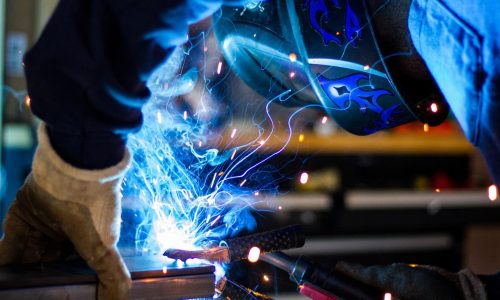
Hickman Engineering is known for providing a wide range of welding services tailored to meet the diverse needs of its clients. Some of the services we offer include:
- MIG Welding: Metal Inert Gas (MIG) welding is a popular method for its speed and versatility, often used in industrial and construction applications.
- TIG Welding: Tungsten Inert Gas (TIG) welding offers precise control and is ideal for thinner materials and critical applications, such as aerospace and automotive.
- Stick Welding: Also known as Shielded Metal Arc Welding (SMAW), this method is suitable for outdoor use and can be used on rusted or dirty materials.
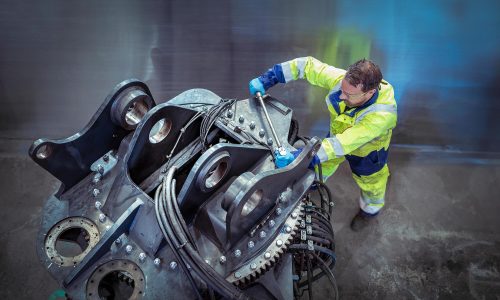
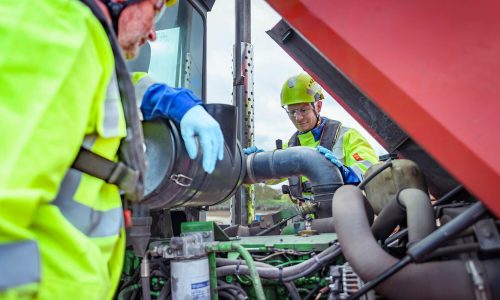
- Repairs and Maintenance: Repairing equipment and structures, focusing on restoring integrity and functionality.
- Custom Welding Projects: Tailored solutions for unique welding challenges, including prototypes and specialised designs.
- Welding Inspection and Quality Control: Ensuring that welds meet industry standards through thorough inspection and testing methods.
- Mobile Welding Services: On-site welding services for convenience and efficiency, particularly for large structures or equipment that cannot be moved.
- Specialty Welding: Services for specific industries, such as aerospace, automotive, construction, or marine and shipping, requiring specialised techniques and materials.
We offer a variety of welding services in a multitude of sectors these being but not limited to:
- Agricultural
- Construction
- Defence Industry
- FMCG Industry
- Manufacturing
- Transport and Logistics
- Marinas and Ports
- Marine Vessels
- Marine Assets.
More information can be found in our Case Studies section on previous works we have undertaken for a wide array of clients
Our Available Testing and Inspection Services
Visual Inspection (VT):
Simple but effective—trained engineers look for cracks, corrosion, or defects with the naked eye and basic tools.
Ultrasonic Testing (UT):
Uses high-frequency sound waves to detect internal flaws in metals, welds, and composites. Popular for checking thickness and integrity of structures.
Magnetic Particle Testing (MT):
Applies a magnetic field and adds particles to reveal surface and near-surface cracks in ferromagnetic materials.
Dye Penetrant Testing (PT):
A coloured dye is applied to a surface, then removed, highlighting any surface cracks or porosity—great for welds and non-ferrous metals.
Radiographic Testing (RT):
Uses X-rays or gamma rays to look inside materials and welds for internal defects like cracks and voids.
Eddy Current Testing (ET):
Electromagnetic induction finds surface and near-surface flaws, often used for tubing and structural components.
Acoustic Emission Testing (AE):
Monitors sound waves released by materials under stress to detect active crack growth or leaks.
Thermographic (Infrared) Testing:
Infrared cameras spot temperature variations to identify hidden defects, leaks, or insulation failures.